Jasmine Andrade
[ad_1]

NASA engineer Ernie Wright looks on as the very first flight-all set mirrors for the James Webb Space Telescope are ready to undertake screening.
David Higginbotham/NASA, MSFC
hide caption
toggle caption
David Higginbotham/NASA, MSFC
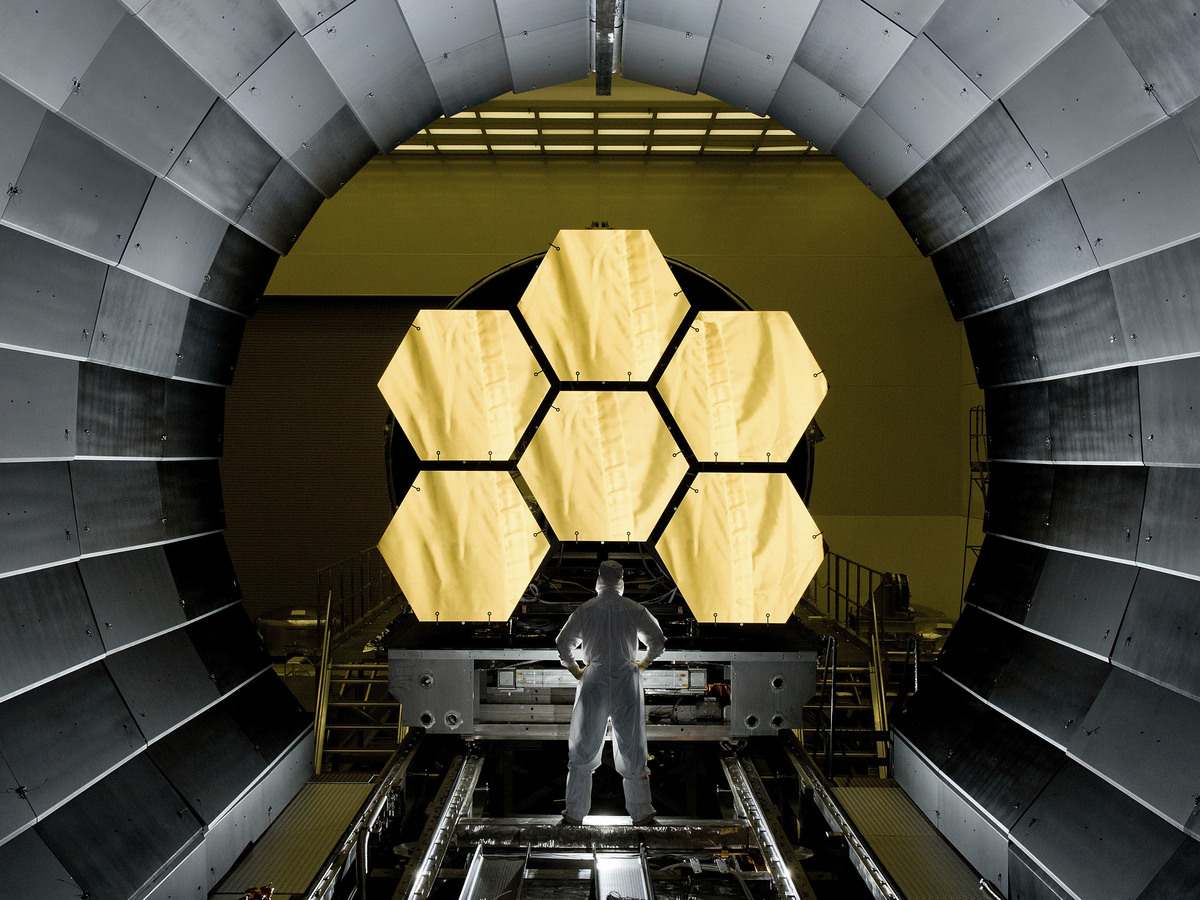
NASA engineer Ernie Wright appears to be on as the very first flight-all set mirrors for the James Webb Space Telescope are ready to go through testing.
David Higginbotham/NASA, MSFC
NASA’s James Webb telescope has been wowing astronomers recently with breathtaking pictures of some of the very first stars in the universe — photos that capture gentle from far more than 13 billion several years in the past.
But whilst the JWST flies by space, it is really accomplished a lot more for us in this article on Earth than display pictures of distant galaxies. The technology formulated to build the JWST has also aided boost the vision of hundreds of thousands of eye surgical procedures clients.
It really is a person of the most current examples in a extensive history of NASA inventions creating an effects on every day life.

Daniel Lockney, NASA’s Technological innovation Transfer System govt, is in charge of the application that facilitates the agency’s technological innovation spinoffs.
“Each and every time NASA gets questioned to do a new mission, we have to come up with new systems and new innovations in order to get it done,” Lockney said. “And it truly is my occupation to make sure that these innovations occur back down to Earth in the variety of functional terrestrial benefits.”
While constructing the JWST, NASA contractors formulated a instrument to evaluate the “microscopic imperfections” on its mirrors, Lockney stated. That identical technologies has allowed eye surgeons to take exact measurements of patients’ eyes in advance of they go through LASIK…
[ad_2]
Read through more below