Jasmine Andrade
[ad_1]
Taipei, Taiwan – Within one particular of lots of compact factories in close proximity to the Taiwanese capital Taipei, a group of about 30 school youngsters is seated prior to common sock rings, finding out about knitting solutions from a bygone period.
It is the way Andrew Wu’s grandfather, Nai Yang, made use of to make socks when he established the business enterprise in then-Japanese-occupied Taiwan in the 1930s: pull the yarn by the hook with a needle, attach it to the ring and then crank more than 200 instances.
In Nai Yang’s working day, workers could expend 6 to eight several hours on one pair of substantial-quality socks, a luxurious product at the time that sold for about 4,000 New Taiwan dollars ($135) in today’s forex. But at Wu’s Wufuyang Socks Museum, travellers can knit their possess socks, h2o bottle holders, stuffed animals, or scarves in just an hour as they master the history of sock producing in Taiwan — and see how the method is performed right now with superior devices.
“With our Do it yourself courses, we instruct them how to thread all the things,” Wu instructed Al Jazeera. “So they actually know how lengthy it will take to make socks. So they worth their items extra.”
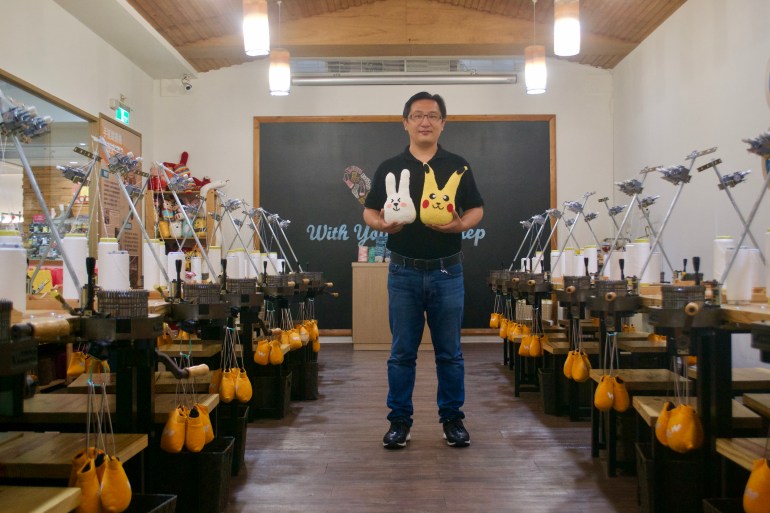
Wu’s “tourism factory” is element of an exertion by Taiwan’s Financial Enhancement Bureau to increase regional tourism by directing cash towards infrastructure that presently exists: its factories.
When regarded as the “factory of the world”, Taiwan hopes its industrial tourism initiative will inspire some factories to continue to keep operations regional relatively than pursuing the worldwide development of transferring to China or Southeast Asia, wherever land and labour expenses are small.
The 20-yr exertion has resulted in a lot more than 150 federal government-authorized “tourism factories” and “manufacturing tradition centres”, and up to 100 more independent examples. Curious holidaymakers can visit museums for shoes, robots, suitcases, pencils, and even condoms, and arrive residence with a Do-it-yourself products to try to remember their check out.
The hope is that a larger emphasis on services – instead than just generation – will create more robust manufacturer…