Jasmine Andrade
[ad_1]
DALLAS – Dec. 13, 2021 – A refined smile emerged on Dr. James Leidner’s experience as he envisioned telling individuals of the uncommon contribution he made to mankind’s mission to Mars.
For 72 straight hours, the examine volunteer lay in a bed at UT Southwestern, the monotony damaged only at night time when scientists put his decreased physique in a sealed, vacuum-outfitted sleeping bag to pull down body fluids that normally flowed into his head even though supine.
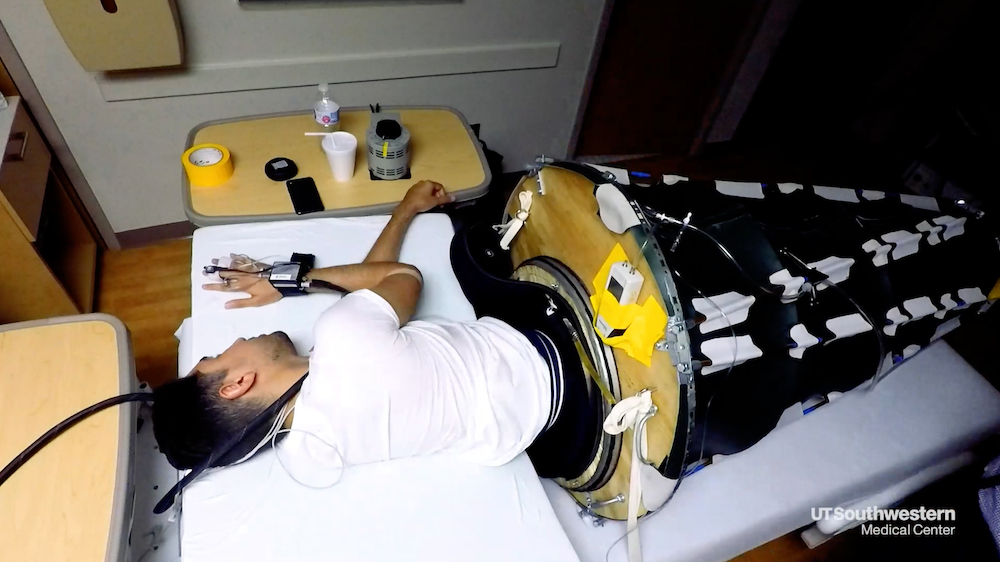
James Leidner invested three evenings in a high-tech sleeping bag that unloads tension in the mind by suctioning fluids into the reduced system. NASA hopes the sack can be employed by astronauts in area to relieve the vision challenges they commonly endure throughout more time missions.
New investigate published in JAMA Ophthalmology reveals that by suctioning these fluids and unloading brain strain, the specifically developed sleeping bag might protect against vision difficulties astronauts endure in house, where fluids float into the head and frequently drive and reshape the back again of the eyeball.
The phenomenon has vexed scientists for more than a ten years and stays one of the biggest well being dilemmas of human place exploration. But the results from UT Southwestern – which NASA enlisted to seek out solutions to astronauts’ vision troubles – counsel the superior-tech sacks may possibly provide a alternative.
Notably, scientists uncovered that although just 3 times of lying flat induced ample stress to a bit change the eyeball’s shape, no this kind of alter occurred when the suction technology was utilized.
“We really don’t know how terrible the consequences could possibly be on a extended flight, like a two-yr Mars operation,” stated Benjamin Levine, M.D., a UT Southwestern cardiologist who is serving to NASA handle the health pitfalls of mind force and abnormal blood movement in place. “It would be a catastrophe if astronauts experienced these kinds of serious impairments that they could not see what they’re doing and it compromised the mission.”
Reshaping eyeballs
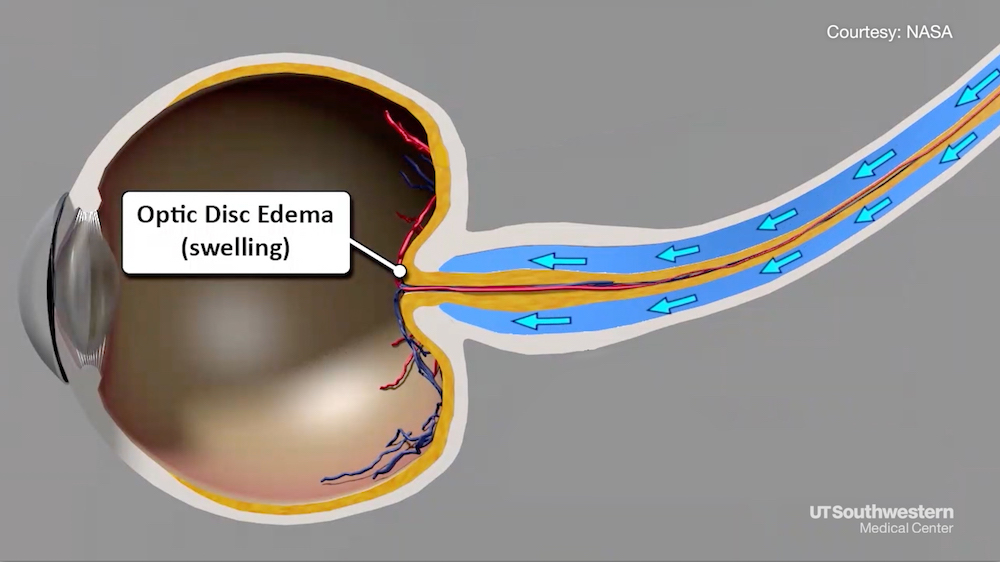
Overall body fluids in zero gravity apply continual strain guiding the eyes, producing progressive flattening of the eyeball, swelling of the optic nerve, and eyesight impairment.
NASA hopes the sleeping bag can…