Jasmine Andrade
[ad_1]
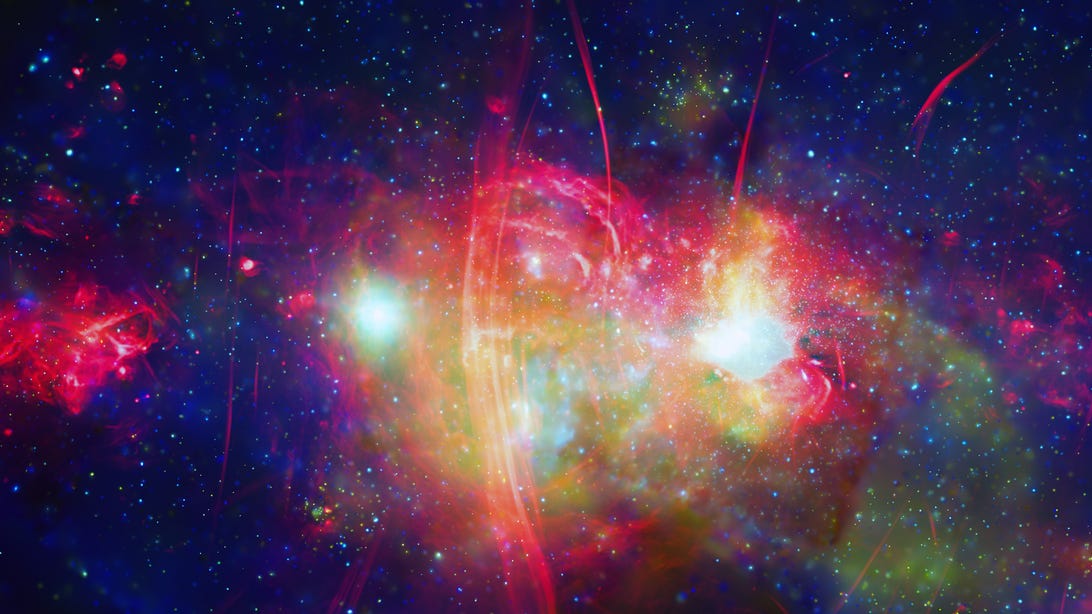
The center of the Milky Way consists of a supermassive black hole and a great deal of stars — but so much, no alien technosignatures
X-Ray:NASA/CXC/UMass/D. Wang et al.Radio:NRF/SARAO/MeerKAT
Using one particular of the world’s most sensitive radio telescopes, a trio of Australian scientists has long gone alien looking in the heart of the Milky Way. In late 2020, they pointed their ears toward the galactic heart, listening for alien technosignatures. In their area of check out lay 144 known exoplanets and, perhaps, billions of stars.
But following preserving their ears to the sky for a lot more than 7 several hours, they failed to listen to anything plausibly alien. It looks awfully peaceful out there.
The research was performed by the Murchison Widefield Array, a collection of 4,096 spider-like antennas planted in the Western Australian desert. The antennas, organized in 256 tiles, can decide on up small-frequency radio waves from place. Importantly, the array has a wide discipline of perspective, which means researchers can pay attention out for technosignatures — indicators broadcast by clever lifestyle — across a enormous region of room.
The lookup is explained in a new paper, which appeared Monday on preprint repository arXiv (PDF) and has been accepted for publication in the journal Publications of the Astronomical Society of Australia.
This isn’t the 1st time the workforce has made use of MWA to hunt for alien alerts, both. They previously examined the dim forest of our cosmos back in 2020 utilizing the MWA, analyzing around 10 million stars, researched the galactic middle back again in…