Jasmine Andrade
[ad_1]
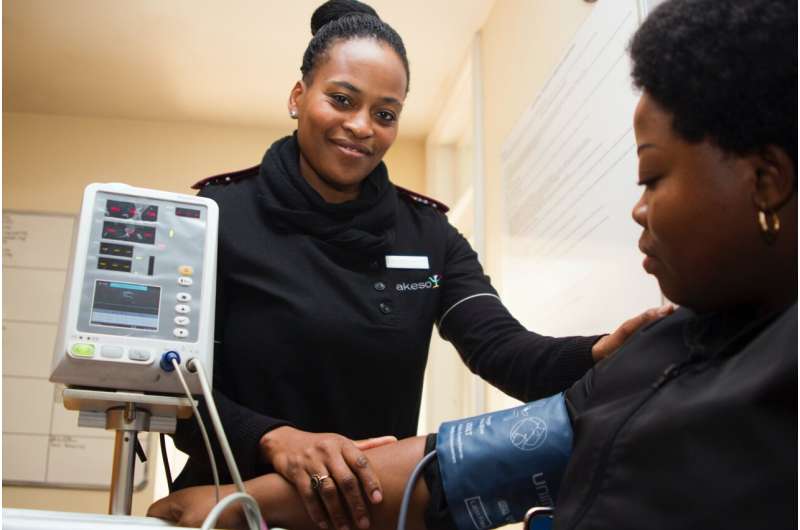
A new posting printed in the peer-reviewed professional medical journal JAMA Cardiology points to the need for individualized behavioral counseling to help people change unhealthy lifestyles to protect against cardiovascular disease (CVD), in particular for people inside of underserved or socioeconomically disadvantaged populations.
The article’s guide writer, Carl “Chip” Lavie, MD explained, “Although CVD is the foremost bring about of dying in the U.S. throughout most races and ethnicities, medical doctors shouldn’t get a 1-dimensions-fits-all strategy to life style counseling.” Dr. Lavie is the Health-related Director of Ochsner Health and fitness Cardiac Rehabilitation and Prevention.
In “Improving upon Behavioral Counseling for Major Cardiovascular Disorder Prevention,” Dr. Lavie and co-authors Barry A. Franklin, Ph.D. and Keith C. Ferdinand, MD, understand that the chance of people partaking in a specific way of life behavior is governed by myriad socioeconomic, attitudinal, and cultural factors. They additional issue to evidence that interventions developed to favorably modify the nutritional routines or bodily activity techniques on a single populace cohort may perhaps be much less effective in a further.
They place forward a variety of proof-centered approaches for individualized counseling that clinicians can use to discover patients’ unhealthy way of living procedures and motivate a behavioral transformation.
The authors connect with out disparities in well being treatment shipping and delivery at several stages and notice that Black grownups have shortened existence expectancy, pushed predominately by the optimum CVD mortality fee. Together with counseling, the authors contend that structural alterations in wellbeing care and personalized neighborhood-centered interventions are sensible ways to halt or reverse significant disparities in morbidity and mortality within just specific population subsets.
…