Jasmine Andrade
[ad_1]
The Goethe-Institut is “a chameleon.” That is how the German cultural institution is described by President Carola Lentz and ethnologist Marie-Christin Gabriel in their new guide marking the 70th anniversary of the non-earnings association.
The Goethe-Institut’s history is one particular of “long lasting reinvention,” Lentz explained to DW.

Carola Lentz became president of the Goethe-Institut final calendar year
It all started off in postwar Germany, when a new affiliation was developed in 1951 in Munich to swap its predecessor, the Deutsche Akademie, which had been compelled to near 6 yrs previously.
The Deutsche Akademie, founded in 1925, had grow to be a software of the Nazi point out, and at the close of the war the US occupiers dissolved what they perceived as a “Nazis’ propaganda and espionage middle working through Europe.”
The generation of the Goethe-Institut hence marked a new political starting.
A new start off with German lessons
The Goethe-Institut initially labored with German lecturers from all over the environment, who ended up invited to appear to Germany for education.
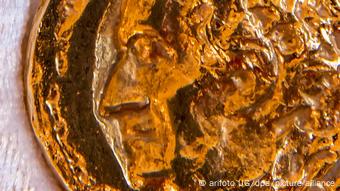
The Goethe Medal is the institute’s yearly prize to honor non-Germans’ contribution to spreading German culture
The establishment speedily started focusing on offering German-language lessons abroad.
For this objective, distinct institutes were being established the very first one was opened in 1952 in Athens. By 1961, 53 extra institutes had been established up. Nowadays, there are 158 Goethe-Instituts in 98 nations around the world.
Amongst 1958 and 1963, the Goethe-Institut moved its focus to Africa, and new branches quickly opened across the continent.
Nevertheless German cultural ambassadors had been sent on tour to Goethe-Instituts all around the planet.
For illustration, jazz musician Albert Mangelsdorff built different perfectly-obtained stops in Asia with his quartet, and digital psychedelic songs from Germany could be listened to in Kabul.
The Chilly War led to a person of the most gripping chapters in the historical past of the institute. While the Jap and Western blocs were being engaged in their arms race, the wrestle for ability and influence also had an effect on overseas cultural plan.
The former East German state, which had also started in Leipzig in 1951 its individual cultural establishment,…
[ad_2]
Read extra below